866-295-4143, fbns@wayoflife.org
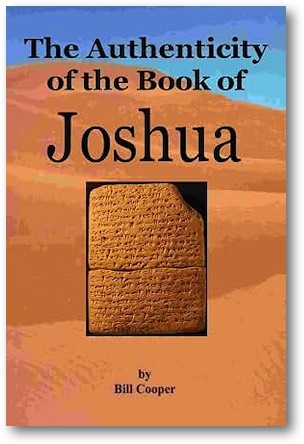
Bill Cooper (1947-2021) was was a prolific writer and speaker, with a gift of cutting through the fog of biblical criticism to defend the infallible, plenary, verbal inspiration of Scripture, the six-day creation, and the Masoretic Hebrew and Received Greek texts. He was a council member of the Creation Science Movement and the Tyndale Society and an adjunct professor for the Institute for Creation Research’s Master Faculty. His most popular book is After the Flood which gives evidence for the historicity of Genesis 10 based on ancient, little known British and European genealogies. He published a series of books entitled “The Authenticity,” which included The Authenticity of the Book of Genesis, Joshua, Judges, Esther, Daniel, Jonah, the Gospels, Acts, the Epistles, and Revelation. In The Forging of Codex Sinaiticus, Cooper gave evidence to support his thesis that Sinaiticus is a forgery.
Cooper was a careful researcher, an independent thinker, and a brave defender of God’s eternal truth. He accomplished this in spite of suffering serious illnesses, including leukemia, the last two decades of his life. We can’t agree with all of his conclusions; at times he seems to be dogmatic when the evidence isn’t absolute; there are a few occasions when he might have been led astray by Jewish mysticism; but everything we have read from his pen is well worth considering.
If you want to be encouraged in your faith in the divine inspiration of Scripture, read Bill Cooper.
Ten of Cooper’s books are available in print from Gullion’s Christian Supply (King and Statesville, NC)
https://www.gullions.com/contact-us
https://www.4gospel.com/bill-cooper/
All of Cooper’s books are available in Kindle format from Amazon.
___________
To read the critics, you’d think that the records of 15th-century BC Canaan would have nothing to say either about Joshua or his people. They will tell you that that is because Joshua himself did not exist, and his people never conquered the land called Canaan. It was all just a myth cobbled together by the wishful thinking of Jewish ‘editors’ after their return from the Babylonian Exile. And this is not some outdated allegation which has been corrected recently as scholarship has improved over the years. It is being made increasingly even today by some of the major critics and taken up by the media and universities. It is therefore with considerable surprise that we read about Joshua and his people, not just once in some ambiguous, fragmentary inscription of dubious date and interpretation, but plainly and at least 85 times in that 15th-century BC Canaanite archive known as the Tell El Amarna Tablets. The critics don’t like to mention the fact, but Joshua himself is sometimes obliquely referred to in the Tablets. There is one man in particular who is referred to as ‘that Hebrew’; ‘that Hebrew dog’; at least three times as the ‘chief of the Hebrews’; and, it seems, in one inscription he is called ‘Ilimilku,’ which name is the Akkadian cognate of the Hebrew name Elimelech, God is my King. It is a nickname which would have suggested itself to Canaanite observers after it became clear to them that Joshua was not a king, but that he fought under the God of Israel. Though not a name that the Bible specifically gives him, it is one that the Canaanites seem to have known him by, and they accordingly wrote it down in their correspondence - ‘Ilimilku!’1
The Hebrews themselves are referred to in the Amarna Tablets as slaves – ‘runaway dogs’ in some of the Tablets – ‘slaves that have become Habiru’ in another - recalling the history of their escape from slavery in Egypt. This again is entirely natural and to be expected. After all, if Rahab, a mere harlot of Jericho, was familiar with this history (Joshua 2:9-11), why should the much better informed kings of Canaan not have been? A trawl through the Amarna archive reveals the following references to Joshua and his people. It does not include every instance in which the Hebrews or their leader are mentioned, but it does give us a good idea of just how prominently Joshua and his people figured on the Canaanite scene. The incursion of the Hebrews was indeed a major invasion, and its startling impact on the Canaanite kings comes over loud and clear in the urgency of their appeals to the Pharaoh of Egypt to send soldiers to help fight them off.
This is evidence for the integrity of the Book of Joshua that is of the very highest quality, and it is astonishing that this information has not been made more available to the public.
What has been made available is the somewhat inaccurate notion that a couple of the tablets mention some “Apiru,” a name which, we are asked to believe, may be derived from the Assyrian word habbatu, meaning robber, and that these occurrences must therefore refer to some troublesome bandits that were roaming the area at that time.
Nothing could be more distorted and inaccurate. It is a forced and false derivation which misleads the reader. The Canaanite kings were certainly strong enough and well enough organised to see off any such bands of robbers, whom they would have hunted to extinction. It is what they did, and they were very good at it. Canaan could never have become a land flowing with milk and honey had it been a land in which lawless bands of cutthroats carried the day. Neither do bands of robbers capture whole swathes of territories along with their walled and fortified cities which were protected by regiments of disciplined and armed soldiers.
No. The term Apiru, which appears throughout the archive, is merely the Akkadian cognate of the word Hebrew (Habiru), Akkadian being the diplomatic language in which most of the tablets are written.
The critics know this very well, and those who deliberately disguise the meaning and hide it from the public - which many of them have done since the archive’s discovery in 1887 - commit a very grave offence indeed.
To counter this concerted misrepresentation, in the quotes below we have rendered the Akkadian word Apiru in all places into its proper meaning of Hebrew, or Hebrews. This will allow the reader to see the contents of the tablets in their correct historical context and perspective.
The quotes below are not from one, but from many Canaanite kings, each of them complaining in turn that as the Hebrews come closer to them, so their danger increases. At the end of each quote, we give the tablet number and the line of text in which the quote appears. It is not a complete list of the occurrences, nor can we be at all sure that the tablets have been catalogued in their correct chronological order. In fact the order appears to have been inverted for some reason, a matter which we will discuss a little later.
In the Appendices, we give the full text of some of the Amarna letters, so that the reader can better judge the context in which certain of the quotes below are given:
[Cooper’s quotes from the Armada Letters can be found in his book The Authenticity of the Book of Joshua.]
...
But there are added corroborations for the Book of Joshua amongst the Amarna Tablets, and one of them is the specific mention of “men of Judah” – ameluti Ia-u-du! – and “armed men [or warriors] of Judah” – ameluti sabe Ia-u-du.2 The Canaanite spelling of Ia-u-du is identical to that of Assyrian inscriptions which later speak of Judah, and it is interesting to see the men of Judah and the many cities allotted to Judah set out so precisely in Joshua 15. The tribe of Judah formed a major component of Joshua’s people, and it is interesting to see the Canaanites unwittingly acknowledging that fact.
It is also worth noting a complaint made by Abdi-heba, king of Jerusalem, that he is troubled by the men of “Laba,” or Levi in the Hebrew.3 Malchiel and Heber (Numbers 26:45), clans descended from the Hebrew tribe of Asher, also figure in Abdi-heba’s complaints as the ‘sons of Milkil’,4 and it is these important details which give the lie to the critics’ claim that the Apiru of the Amarna Tablets are not Hebrews but bands of Bedouin raiders. Bedouin were never called ‘men of Judah,’ ‘Malchielites’ or ‘Heberites’ by anyone, not in Canaan or anywhere else, and it is most disappointing that the critics don’t seem to know that fact. Perhaps one of them would like to explain why they don’t know it?
But for such a major portion of the Amarna archive to be taken up with such urgent pleas for military help from Egypt against the Hebrews - and men of Judah! - it is clear that we are not here dealing with bands of robbers. Such roving thieves were dealt with on a daily basis throughout the Middle East, and their suppression certainly did not require pleas for international military assistance. Neither did they ever reduce so many kings at once to a state of abject panic, confusion and despair. No. The Hebrews – the people of the Book of Joshua and the Apiru of the Amarna Tablets – were one and the same, and were much more than mere robbers. They were a formidable and devastating military presence who were systematically and successfully overrunning the land, and they were not about to go away.
When we read of these things in the Amarna Tablets, we see the truth of Rahab’s words to the spies when she said to them: “I know that the LORD hath given you the land, and that your terror is fallen upon us, and that all the inhabitants of the land faint because of you. For we have heard how the LORD dried up the water of the Red Sea for you, when ye came out of Egypt; and what ye did unto the two kings of the Amorites, that were on the other side Jordan, Sihon and Og, whom ye utterly destroyed. And as soon as we had heard these things, our hearts did melt, neither did there remain any more courage in any man because of you....” Joshua 2:9-11. These words were not written by some Jewish propagandist composing his lie a full one thousand years after the event. We read the Tablets, and we read Rahab’s words, and we see at once that her words are authentic, reflecting exactly the reality of what was occurring in her own day and in her land of Canaan. The Canaanite kings have left their own vociferous testimony to the truth of the Book of Joshua, and it is no exaggeration to say that, had the invasion of Canaan under Joshua not taken place – as the critics claim - then the Amarna archive would never have carried this independent testimony to the fact that the Hebrews – including men of Judah, Levites, Malchielites and Heberites! - successfully invaded and overran Canaan in the late 15th century BC, the very time in which the archive’s contents were written. And we must remember that the archive’s letters were not written and sent by just one of Canaan’s kings, but by many.
...
The story begins with the publication in 1893 of Major C R Conder’s The Tell Amarna Tablets.3 Conder was a Bible believer who was more than happy to point out to the reading public how the latest archaeological discoveries corroborated the Bible. Hence he saw no difficulty whatever in transliterating and translating – and then publishing - Biblical names whenever he came across them. Happily for Bible apologists, he was able to translate the Amarna Tablets before the modernist critics moved in and brought down the shutters. They were too late, of course. Apart from the fall of Jericho, Conder had already informed the public that: “The names of Japhia, King of Gezer; of Jabin, King of Hazor; and, probably, Adonizedek, King of Jerusalem - contemporaries of Joshua – occur among those of the writers.”4 Each of these personages and the cities which they ruled (including Jericho), are known to us from the Book of Joshua itself. Naturally, Bible apologists were delighted with the news. One amongst many was the Rev. Thomas Harrison, Fellow of the Royal Geographical Society, Member of the Society of Biblical Archaeology, and Senior Lecturer to the Palestine Exploration Fund – and so on, not an unimportant voice in those days. On May 19th 1893, he greeted Conder’s translation of the Tablets in these welcoming terms: “It is certainly very interesting to find in the letters the names of Japhia (Josh. x., 3, one of the kings killed by Joshua) and most probably that of Adonizedek, king of Jerusalem; while the name of a king of Hazor is read as Jabin (Josh. xi., 1).... Many matters of great interest in connection with these tablets can find no mention within the limits of this paper. It may be added, however, that the topographical value of these letters is very great; and also that the evidence which they afford as to the Hebrew conquest of Palestine under Joshua is in favor of the Bible chronology (Acts xiii., 20; I. Kings vi., 1) and against that of Dr. Brugsch and Bunsen.”5
It could not have been worse news for the critics. Their denigration of the Scriptures was almost in full swing, and this kind of information reaching the public could undo decades of hard work. Then as now, the critics had only one agenda, and that was to destroy the credibility of the Bible in the public imagination. The Amarna archive threatened that agenda very seriously indeed, and it is interesting to see how the damage was limited. The first to tell us about what happened is one Robert Harper whom we have met elsewhere:6 “The Tel-el-Amarna tablets in the British Museum are marked Bu. 88- 10- 13+ or, Budge the 13th of October, 1888. Students have inquired for these tablets ever since their arrival in the British Museum, but the answer given was, "they are reserved for official use." Later on it became known that Drs. Bezold and Budge were preparing an edition of this collection.”
They were indeed, and their edition appeared in 1892.8 Bezold and Budge would have known that Conder had been translating the tablets – he had been working under their very noses - and they would have known by reputation where his sympathies lay concerning the Bible. It was essential therefore that their edition pre-empted the news that Conder was about to release, and so, bringing out their – untranslated! - edition of the tablets in 1892, the year before Conder published his translation, they were careful in their jointly-written preface to avoid all suggestion that the Book of Joshua was in any way exonerated by the Amarna archive. Not once is the Hebrew invasion of Canaan referred to, and the Old Testament in general is only briefly acknowledged merely for the fact that its Hebrew is related to the language of the tablets. They were laying the ground for what was to follow.
E A Wallace Budge is also known to us elsewhere for his public denigration of the Assyriologist George Smith, who, like Conder after him (he died in 1876), was not averse to advertising to the public any and every occasion on which he found the Bible exonerated in the Assyrian inscriptions.9 Wallace Budge was a thoroughly godless man with a strong anti-Biblical bias. Wrapped in spiritualism and an active member of the occult, he was placed by the British Museum in a position of great authority, being able to censor any of the Museum’s publications before they went to press. And so it is that under him all information exonerating the Bible or any part of it was actively and conscientiously suppressed. Hence, in his edition of the Amarna archive, any sympathetic, exonerating reference to the Bible and to the Book of Joshua in particular is avoided.
...
“In his Rise and Progress of Assyriology (1925), Wallace Budge attempted to portray George Smith nearly fifty years after his death as an emotionally-charged buffoon who was unfitted for the tasks appointed him (Damrosch, pp. 64-80), forgetting that from 1872 onwards Smith had taken him under his wing and had taught him the Assyrian language, in spite of his own horrendous workload. Wallace Budge, in other words, owed the launch of his career to George Smith’s Christian kindness and patience. But Wallace Budge was no stranger to slandering his friends and colleagues, and in 1893 was even sued for it. But then, paying no more than faint lip service to ‘liberal Christianity’ whilst he pursued his spiritualism, there was little to restrain or improve him. His interests turned from Assyriology to Egyptology because, like himself, the Egyptians had little to say about the Bible, and they worshipped the dead. Admired by Blavatsky, the founder of the Theosophical (Luciferian) Society; involved in the Ghost Club, the spiritualist ‘church’ founded in 1862 by the apostate Bible critics Westcott and Hort; and a member of the occultic Hermetic Order of the Golden Dawn, Wallace Budge was steeped in devilry – and this was the man that the British Museum selected to replace George Smith. It hardly bears thinking about.” Authenticity of the Book of Genesis, p. 209. – see also p. 202.
- Receive these reports by email
- www.wayoflife.org
______________________
Sharing Policy: Much of our material is available for free, such as the hundreds of articles at the Way of Life web site. Other items we sell to help fund our expensive literature and foreign church planting ministries. Way of Life's content falls into two categories: sharable and non-sharable. Things that we encourage you to share include the audio sermons, O Timothy magazine, FBIS articles, and the free eVideos and free eBooks. You are welcome to make copies of these at your own expense and share them with friends and family. You may also post parts of reports and/or entire reports to websites, blogs, etc as long as you give proper credit (citation). A link to the original report is very much appreciated as the reports are frequently updated and/or expanded. Things we do not want copied and distributed are "Store" items like the Fundamental Baptist Digital Library, print editions of our books, electronic editions of the books that we sell, the videos that we sell, etc. The items have taken years to produce at enormous expense in time and money, and we use the income from sales to help fund the ministry. We trust that your Christian honesty will preserve the integrity of this policy. "For the scripture saith, Thou shalt not muzzle the ox that treadeth out the corn. And, The labourer is worthy of his reward" (1 Timothy 5:18). Questions? support@wayoflife.org
Goal:Distributed by Way of Life Literature Inc., the Fundamental Baptist Information Service is an e-mail posting for Bible-believing Christians. Established in 1974, Way of Life Literature is a fundamental Baptist preaching and publishing ministry based in Bethel Baptist Church, London, Ontario, of which Wilbert Unger is the founding Pastor. Brother Cloud lives in South Asia where he has been a church planting missionary since 1979. Our primary goal with the FBIS is to provide material to assist preachers in the edification and protection of the churches.
Offering: Offerings are welcome if you care to make one. If you have been helped and/or blessed by our material offerings can be mailed or made online with with Visa, Mastercard, Discover, or Paypal. For information see: www.wayoflife.org/about/makeanoffering.html.